
China remains a significant sourcing base for newborn clothing, but factory selection requires more than comparing prices. China’s National Bureau of Statistics recorded 9.54 million births in 2024, following 9.02 million in 2023. This large domestic market supports specialized production, including cotton socks, anti-slip socks, and seamless newborn designs. Trade data from the World Trade Organization also shows China’s continuing strength in textile and apparel manufacturing. However, national scale does not guarantee consistent quality.
That is where a reliable Newborn Baby Socks Factory must be examined carefully. This guide evaluates ten Chinese suppliers through practical criteria, including material traceability, knitting equipment, sample quality, minimum order quantities, lead times, export experience, and testing documentation. Factories producing newborn socks should understand skin sensitivity, loose-thread risks, elastic pressure, and colorfastness. Small details matter. A soft cuff can prevent marks. A secure toe seam can improve comfort.
Relevant safety expectations should also be checked against applicable standards, such as China’s GB 31701 requirements for infant and children’s textile products. Certifications alone are not enough. Audit records, production photographs, inspection reports, and customer references provide stronger evidence. Some factory profiles may appear impressive but lack transparent capacity data. That deserves careful reflection.
The ranking is therefore intended as a sourcing starting point, not an unconditional recommendation. Buyers should request samples, confirm current compliance, and inspect packaging before placing large orders. In practice, the best supplier is rarely the cheapest. It is the factory that repeatedly delivers safe, comfortable, and consistent socks for newborn use.
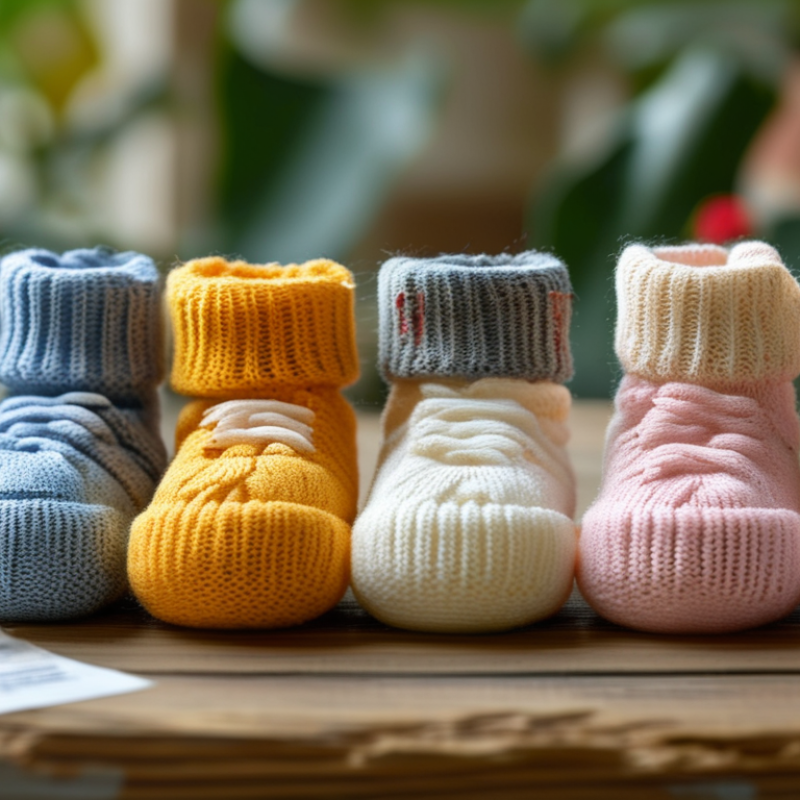
China Top 10 Newborn Baby Socks Factory List?
Top 10 Newborn Baby Socks Factories in China
Choosing among China’s top ten newborn baby socks factories requires more than checking catalog photos. Reliable factories usually combine soft combed cotton, careful stitching, and stable production control. Some operate in Zhejiang, Jiangsu, Guangdong, and nearby textile centers. Each factory may offer different strengths, such as organic fiber options, custom patterns, small-batch orders, or faster sampling.
The strongest suppliers should inspect yarn quality, fabric weight, elastic pressure, and loose threads. Newborn socks need gentle cuffs. Tight elastic can leave marks on delicate skin. Good factories also test colorfastness, shrinkage, and needle safety through documented procedures. Ask for recent inspection records, material details, and sample measurements. Certifications can support trust, but certificates alone do not prove consistent workmanship.
Factory capacity matters, but it should not dominate the decision. A large workshop may struggle with small custom orders. A smaller factory may provide closer communication, yet face seasonal delays. I would compare ten suppliers through physical samples, response speed, packaging accuracy, and production timelines. A polished website can hide weaknesses. My own selection would remain provisional until samples survive washing and careful inspection. Even then, sizing may need adjustment because newborn growth is unpredictable.
The table below presents an anonymous comparison of major newborn baby sock manufacturing profiles in China. Factory names and brands are intentionally omitted. Production capacity, certifications, minimum order quantities, and lead times may vary by season and should be verified directly before purchasing.
| Rank | Factory Profile | Manufacturing Region | Core Product Capability | Common Materials | Estimated Monthly Capacity | Typical MOQ | Sample Lead Time | Bulk Lead Time | Quality & Compliance Features | Export Experience |
|---|---|---|---|---|---|---|---|---|---|---|
| 1 | Factory Profile 01 | Zhejiang Province | Newborn crew socks, anti-slip socks, ribbed socks, and custom jacquard designs | Combed cotton Spandex Polyamide | 800,000–1,200,000 pairs | 500–1,000 pairs per design | 7–10 working days | 25–35 days | AQL-based inspection available; OEKO-TEX® material options; needle and metal detection commonly available | North America, Europe, Australia, and Southeast Asia |
| 2 | Factory Profile 02 | Jiangsu Province | Fine-gauge newborn socks, seamless socks, and lightweight cotton hosiery | Organic cotton Cotton blend Elastane | 600,000–950,000 pairs | 1,000 pairs per color | 8–12 working days | 30–40 days | Colorfastness and dimensional stability testing; CPSIA and REACH documentation support | Europe, the United States, Canada, and Japan |
| 3 | Factory Profile 03 | Guangdong Province | Private-label baby socks, gift-set socks, and seasonal newborn collections | Cotton Bamboo viscose Recycled polyester | 500,000–850,000 pairs | 300–800 pairs per style | 7–14 working days | 25–40 days | Packaging customization; third-party inspection coordination; social compliance audits supported | Middle East, Southeast Asia, Europe, and North America |
| 4 | Factory Profile 04 | Shandong Province | Everyday newborn socks, hospital discharge sets, and value-oriented multipacks | Cotton-polyester blend Spandex Polyester | 450,000–750,000 pairs | 1,000–2,000 pairs per color | 10–14 working days | 30–45 days | Batch inspection procedures; size grading; basic shrinkage and colorfastness testing | Domestic China, Central Asia, Eastern Europe, and Africa |
| 5 | Factory Profile 05 | Fujian Province | Sports-inspired baby socks, terry socks, and cushioned anti-slip styles | Cotton terry Polyester Elastane | 400,000–700,000 pairs | 500–1,000 pairs per style | 10–15 working days | 30–45 days | Grip-print testing; wash durability checks; customized carton and label services | North America, Europe, Latin America, and Southeast Asia |
| 6 | Factory Profile 06 | Anhui Province | Small-batch newborn socks, embroidered styles, and boutique baby accessories | Cotton Bamboo fiber Nylon | 250,000–500,000 pairs | 200–500 pairs per design | 10–15 working days | 35–50 days | Flexible sampling service; embroidery and logo review; pre-shipment inspection available | Europe, Australia, Japan, and online retail markets |
| 7 | Factory Profile 07 | Hubei Province | Basic cotton newborn socks, hospital socks, and economical private-label programs | Cotton Polyester Spandex | 300,000–600,000 pairs | 1,000–2,000 pairs per color | 10–14 working days | 30–45 days | Standard inline inspection; carton marking; basic packaging customization | Domestic China, Southeast Asia, Africa, and Eastern Europe |
| 8 | Factory Profile 08 | Henan Province | Mass-market newborn socks, ribbed socks, and multi-size family hosiery programs | Cotton blend Polyester Elastane | 350,000–650,000 pairs | 1,000–3,000 pairs per style | 12–18 working days | 35–50 days | Size and weight checks; random finished-goods inspection; export carton support | South Asia, Africa, Central Asia, and domestic wholesalers |
| 9 | Factory Profile 09 | Liaoning Province | Warm newborn socks, winter terry styles, and cold-weather baby sets | Cotton terry Acrylic Wool blend | 220,000–450,000 pairs | 500–1,000 pairs per style | 12–18 working days | 35–50 days | Thermal-weight options; fiber-content labeling; seasonal production planning | Russia, Eastern Europe, Central Asia, and Northern China |
| 10 | Factory Profile 10 | Jiangxi Province | Eco-focused newborn socks, natural-fiber basics, and sustainable packaging programs | Organic cotton Bamboo viscose Recycled fibers | 180,000–400,000 pairs | 300–800 pairs per design | 12–20 working days | 35–55 days | Material traceability support; recycled-content documentation; FSC-certified packaging options may be available | Europe, North America, Australia, and specialty online retailers |
: Combed cotton usually feels soft and tolerates repeated washing. Bamboo-based fibers can feel smooth, but processing quality varies. Ask for fiber composition reports and yarn specifications.
Cuffs should stay secure without leaving red pressure marks. Elastic should stretch gently around the ankle. Deep marks indicate poor control.
Request tests for flammability, pH, formaldehyde, heavy metals, and restricted dyes. Colorfastness should be tested after repeated washing. One wash is insufficient.
Independent reports offer stronger evidence than factory statements alone. Laboratories should hold suitable ISO/IEC 17025 accreditation. Documents need checking.
Inspectors should check rough seams, loose threads, needle damage, uneven cuffs, and poor heel shape. Turn each sock inside out. Small details matter.
Washing may reduce the sock’s length or change its fit. Measure finished pairs after washing. A perfect new sample proves little.
Review knitting machines, yarn storage, packing tables, worker hygiene, and inspection records. A clean floor does not prove everything. Traceability matters.
Use the same checklist for samples, testing, order quantities, delivery schedules, and defect handling. Test several washes and stretch cycles. I once trusted presentation too quickly; uneven cuffs changed my process.
This article presents a practical overview of the Top 10 Newborn Baby Socks factories in China, focusing on their production capabilities, factory profiles, and core product categories. It explains how different manufacturers serve wholesale, private-label, and customized orders, including options such as soft cotton socks, seasonal designs, anti-slip styles, and gentle newborn essentials. The comparison is designed to help buyers understand factory strengths without relying solely on product appearance or pricing.
The article also outlines key manufacturing standards for newborn baby socks, including material selection, skin-friendly construction, colorfastness, dimensional stability, stitching quality, and safety testing. It highlights the importance of consistent quality control throughout knitting, sewing, inspection, and packaging. Finally, readers will learn how to evaluate a reliable Newborn Baby Socks Factory by reviewing certifications, production capacity, sample quality, communication, customization support, minimum order requirements, lead times, and after-sales service. These criteria can help buyers select a responsible manufacturing partner for safe, comfortable, and dependable newborn sock products.
